Installing Eocortex applications🔗
Preparing the computer🔗
Minimum requirements on the computer hardware can be calculated at the Software for IP Cameras / Calculator page of the eocortex.com website.
Note
Detailed recommendations on the computer hardware are provided in the full version of the software documentation.
For the best CPU performance, it is recommended to disable power saving features, like EIST for Intel or Cool'n'Quiet for AMD CPUs. Such features usually can be disabled in the Advanced/CPU section of the BIOS settings. To use SATA drives, it is important to set AHCI as SATA mode. This option is typically available in the Advanced/SATA section of the BIOS settings, but only for those controllers that support this mode.
Before installing the Eocortex software, it is important to prepare the operating system:
Install all Windows updates and disable auto-update feature.
Select the proper time zone according to the location of the server and set the date and time manually, or synchronize it with an NTP server on the Internet or on the company's local network. Once the date and time are set, disable synchronization.
Switch the power plan to high performance. Go to Control panel / Power options and enable the High Performance Power Plan. It is also recommended to disable the Turn off hard drive feature in the power plan settings, as the drives in the video surveillance system must be active clock round and hibernating drives or turning them off while the system is running may cause the Eocortex server malfunction.
Disable User Account Control. Go to Control panel / User accounts / Change User Account Control settings and set the slider to the Never notify position.
Using antivirus and network protection software reduces the performance of Eocortex applications and, if configured incorrectly, may block access to video surveillance system components. In this regard, it is recommended to adhere to the following recommendations:
Do not use antivirus software and firewalls on servers and client workstations Eocortex. This will prevent performance degradation and blocking of video surveillance system data.
If security policies require the use of antivirus and network protection tools, these tools should be configured in accordance with the recommendations below.
In the firewall settings, open the network ports that allow the video surveillance system server to interact with cameras, client devices, and also with other servers in multiserver systems.
Add the Eocortex application files to the list of trusted applications in your antivirus software.
Exclude antivirus scanning of video streams from cameras to the server, from the server to clients, and, when using client connection proxying in multiserver systems, from server to server.
Warning
Some antivirus software check video streams even when disabled, since they “embedding” their own components at the system drivers level when installed.
For proper operation and to ensure the performance of the Eocortex applications, it is recommended to not install such antivirus software on servers and client workstations of the video surveillance system, if possible.
The network ports used by the Eocortex video system are listed below.
The Eocortex server. Outgoing TCP connections:
Port 80 (Can be changed in the settings of some cameras): For connecting to the camera via HTTP and ONVIF.
Port 443 (Can be changed in the settings of some cameras): For connecting to the camera via HTTPS.
Port 554 (Can be changed in the settings of some cameras): For connecting to the camera via RTSP.
Port 8080 (By default. Can be changed in the Eocortex Configurator application): For non-secure connections to other servers in a multiserver system.
Port 18080 (By default. Can be changed in the Eocortex Configurator application): For secure SSL connections to other servers in a multiserver system.
The Eocortex server. Incoming TCP connections:
Port 8080 (By default. Can be changed in the Eocortex Configurator application): For non-secure connections to the client and server applications.
Port 18080 (By default. Can be changed in the Eocortex Configurator application): For secure SSL connections to the client and server applications.
Port 8089 (By default. Can be changed in the Eocortex Configurator application): For mobile application and web client connections when server-side proxying for them is disabled (this feature is enabled by default; it can be disabled in the server settings within the Eocortex Configurator application).
The Eocortex server. Outgoing and incoming TCP connections:
Port 5432 (By default. Can't be changed): For connection to the PostgreSQL DBMS;
Port 8899 (By default. Can't be changed): For connection to the Episode archive service;
Port 8999 (By default. Can't be changed): For connection to the Long-term database service;
Port 8889 (By default. Can't be changed): For connection to the Eocortex System Health Monitoring service.
Eocortex Client. Outgoing TCP connections:
Port 8080 (By default. Can be changed in the Eocortex Configurator application): For non-secure connections to the client and server applications.
Port 18080 (By default. Can be changed in the Eocortex Configurator applicatio): For secure SSL connections to the client and server applications.
Note
Ports with default values 8080/18080, which are used in insecure/secure connections respectively, are used to exchange all data (video, audio, events, metadata, system information, control commands, etc.) between the Eocortex client and server applications.
Note
Also, depending on the settings of the cameras used and the Eocortex features enabled, it may be necessary to open other ports for incoming and outgoing connections.
If the antivirus is installed on the computer, it should not scan HTTP and RTSP traffic, including incoming video streams from IP cameras, as this will significantly affect system performance. Also, it is important to include the Eocortex application executables in the list of trusted antivirus and firewall applications.
Warning
Some AV software scan video streams even when disabled, cause during installation they “embed” own components at the OS drivers level. Because of that, for the best performance, it is recommended to not install AV software on the computer hosting the Eocortex server if possible.
Warning
It is not recommended to install Eocortex applications on the computer with other video surveillance software or screen capturing software installed, even if such software is not running when working with Eocortex applications. Doing so may cause Eocortex software to malfunction.
Installing Eocortex applications from the Full version package🔗
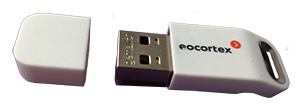
It is recommended to close all Windows and third-party applications and plug in the Eocortex protection USB key to the computer before starting the installation of Eocortex applications.
Warning
Installation of the Eocortex Server must be performed under an account that has full access rights to the computer, such as local administrator, domain administrator, etc.
To install the Eocortex applications, run the EocortexMainCommon Installer.exe file.
In the Select language window that opens, select the language that will be used both during installation and further operation of the application on this computer.
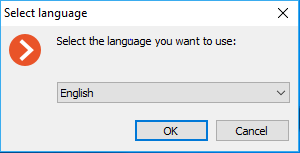
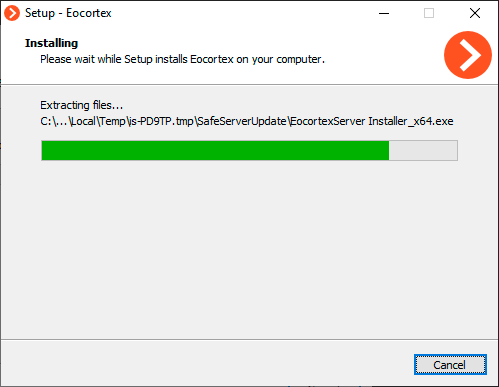
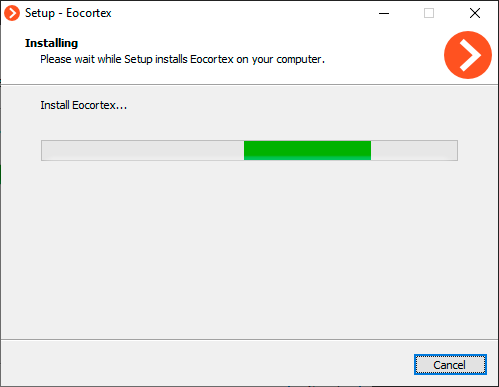
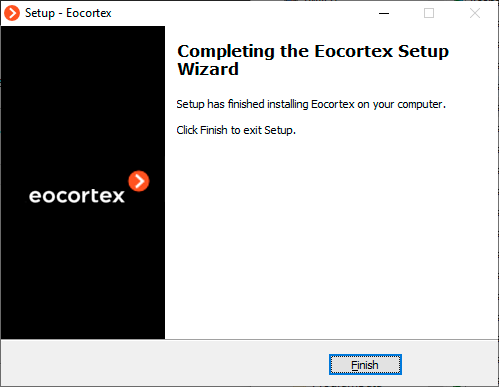
Clicking OK starts the Eocortex installation wizard. Follow the instructions.
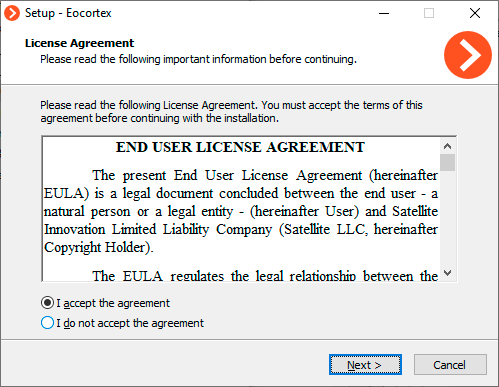
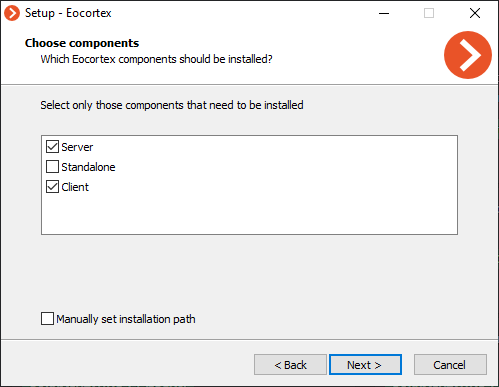
On the Select components page, select the applications that must be installed on the computer. In this example, the Server and Client options are selected.
Note
When the Eocortex Server component is installed, it will automatically start as a Windows service. At the same time, a user root with an empty password, which has an inalienable full set of rights, will be created on the server by default. Later, it is recommended to change the password for this user.
Note
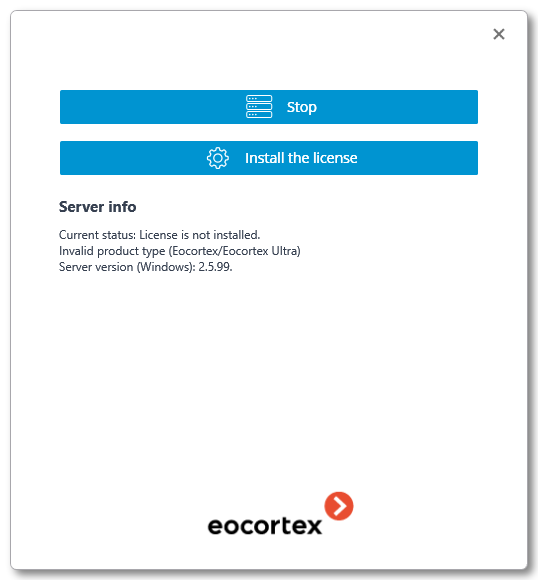
Also, after closing the installation wizard, the Eocortex Server Info utility window will open. Clicking the Install License button will start the license installation and activation wizard. Installing and activating the license is described further in the section Configuring the video surveillance server.